The Other Side of the Frame: Why the Witnesses to Your Greatest Moments Matter Most
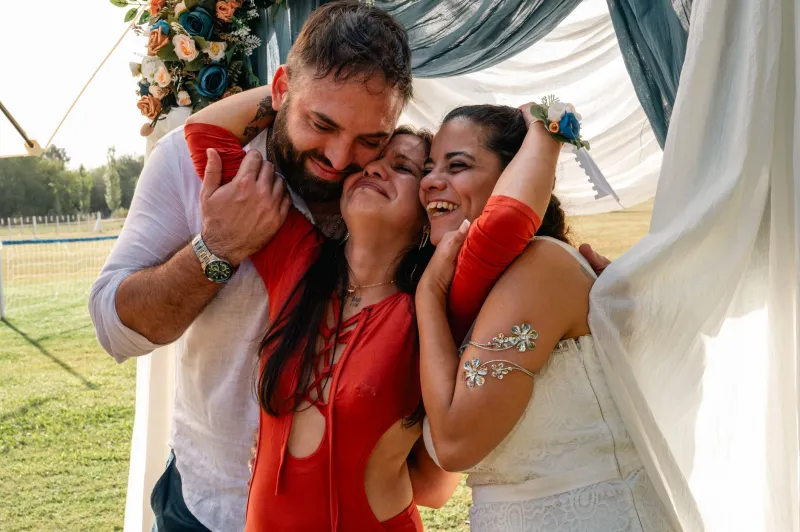
There is a moment during almost every wedding ceremony — fleeting, unrepeatable — when the groom turns to watch his bride walk down the aisle. His expression, unfiltered and unperformed, tells a story that no rehearsed pose ever could. The same holds true for the mother in the third pew pressing a handkerchief to her eyes, or the best friend in the back row breaking into a grin he cannot contain. These are not the moments anyone planned for. And yet, years from now, they may be the photographs no one can put down.
This is the quiet art of reaction photography — and it represents one of the most meaningful distinctions between a skilled professional and someone simply pointing a camera at the obvious.
The Moment No One Thinks to Document
When most couples sit down to plan their wedding photography, they naturally focus on the principal subjects: the first look, the exchange of vows, the first dance. These anchoring moments deserve careful attention, and any experienced photographer will deliver them with precision and care.
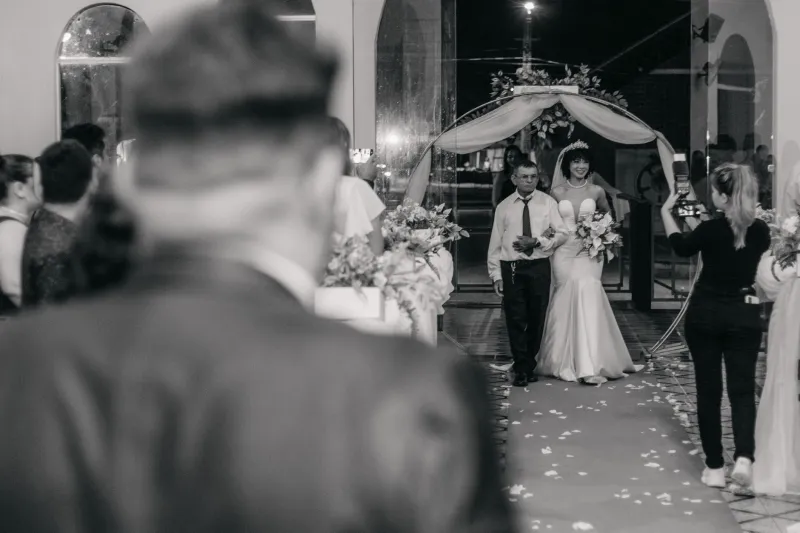
But consider what is happening in the surrounding frame during each of those moments. A father's jaw tightening as he realizes he is about to give his daughter away. A grandmother quietly mouthing the words to a song she has known for sixty years. A sibling reaching over to squeeze a hand without saying a word. These responses are not incidental. They are, in many ways, the emotional proof that the central moment actually mattered.
A photographer who trains their eye only on the subject at the front of the room captures the event. A photographer who also turns that lens toward the audience captures the meaning.
Why Peripheral Emotion Carries Such Weight
Psychologists who study memory and emotional resonance have long noted that human beings are hardwired to read faces. When we see genuine emotion reflected in someone we love — not performed for the camera, but involuntary and raw — it triggers a depth of feeling that a direct image rarely achieves on its own.
This is precisely why reaction photographs age so well. In the immediate aftermath of a wedding, couples are drawn to the grand, beautiful images: the sweeping venue shot, the perfectly lit portrait, the dramatic first-kiss frame. But five, ten, or twenty years later, it is often the candid reaction photograph that stops them cold. The image of a father trying not to cry. The moment two friends locked eyes across the room. The look exchanged between a couple during a toast that no one else caught.
These images do not simply record what happened. They document how much it mattered to the people who were there.
The Skill Required to Catch What Isn't Obvious
Capturing authentic reactions is not a matter of luck or simply keeping a camera ready. It requires anticipation, spatial awareness, and a thorough understanding of how people behave in emotionally charged environments.
A seasoned photographer arrives at an event having already mapped the room in their mind. They know that when the vows begin, the bride's mother will likely be seated to the left. They understand that the moment a ring slides onto a finger, eyes in the crowd will instinctively glance toward the parents. They position themselves not just for the action, but for the response.
This kind of intentionality also demands technical fluency. Reaction shots frequently happen in low light, at a distance, and without warning. A photographer must be able to shift exposure settings and focal length seamlessly, without the mechanical disruption that pulls subjects out of their authentic emotional state. The best reaction photographs are taken by someone the room has essentially forgotten is there.
What a Second Shooter Adds to This Equation
For larger events, the case for hiring a second photographer becomes especially clear when viewed through this lens. When one photographer is positioned to document the primary moment — the couple at the altar, the honoree at the podium — a second photographer is free to work the perimeter, moving quietly through the room in search of the unguarded responses that the primary lens cannot reach.
This division of attention transforms the final gallery from a linear record of events into a multidimensional emotional portrait. The same moment is documented from two perspectives simultaneously: what happened, and what it meant to everyone watching.
Couples who have invested in this approach often describe the experience of reviewing their full gallery as unexpectedly moving — not because of any single image, but because of the cumulative effect of seeing their most important day reflected back through the faces of everyone who loved them.
The Conversation Worth Having Before You Book
If reaction photography matters to you — and after reading this, it likely does — it is worth raising the subject explicitly when interviewing potential photographers. Ask to see examples of candid reaction images from their previous work. Pay attention not just to technical quality, but to whether those images feel genuinely spontaneous or subtly staged.
Ask how they typically position themselves during key ceremony moments. Ask whether they communicate with venue staff in advance to anticipate where family members will be seated. Ask whether they build time into the event timeline for working the room between formal shots.
A photographer who answers these questions with specificity and enthusiasm is one who has thought carefully about the full emotional story of an event — not just the obvious highlights.
The Complete Narrative
Every significant occasion in life generates two parallel stories: the one at the center of attention, and the one written on the faces of everyone watching. A truly comprehensive photographic record honors both.
The most technically perfect portrait in the world cannot replace the image of your new husband watching you walk toward him for the first time. The most beautifully composed reception shot cannot substitute for the photograph of your parents holding each other's hands in the crowd, quietly undone by the weight of the moment.
These are the images that do not simply remind you of what your wedding looked like. They remind you of what it felt like to be surrounded by people who loved you enough to let their guard down entirely.
That is the photograph worth planning for. And it requires a photographer skilled enough — and attentive enough — to be watching the right face at precisely the right moment.