When the Light Turns Against You: A Professional's Playbook for Adapting in the Middle of a Shot
Photo: Singlespeedfahrer, CC0, via Wikimedia Commons
Photography plans rarely survive contact with reality. A couple may spend months selecting an outdoor venue for the quality of its late-afternoon light, only to watch a bank of clouds settle in at precisely 4:30 p.m. on their wedding day. A corporate event scheduled in a beautifully photographed ballroom may look entirely different when the overhead fluorescents are running at full intensity and the decorative lighting hasn't been turned on yet. A child whose portrait session was choreographed with quiet precision may decide, at the decisive moment, to sprint in the opposite direction.
These are not failures of planning. They are simply the conditions under which professional photography is actually practiced. The ability to read a changing situation and respond with intention — rather than frustration — is among the most consequential skills a photographer can develop. Understanding how that process works offers insight into why professional images hold up even when circumstances do not cooperate.
The Outdoor Ceremony That Clouds Take Over
Flat, overcast light is one of the most misunderstood conditions in photography. For many clients, clouds arriving on a wedding day feel like a disaster. For a working photographer, they represent a significant shift in the technical and creative approach — but not necessarily a worse one.
Direct sunlight creates hard shadows and forces subjects to squint. It produces unflattering contrast on faces and can make skin tones appear uneven in ways that are difficult to correct in post-processing. An overcast sky functions as an enormous natural diffuser, wrapping subjects in soft, even light that is genuinely forgiving for portraiture.
The adjustment, then, is not to mourn the lost sun but to recognize what the new conditions offer. Exposure settings shift — typically opening the aperture wider or extending the shutter speed slightly to compensate for reduced ambient light. The creative framing may change as well: without a strong directional light source, images can feel flatter, which means the photographer must compensate through composition, depth, and the positioning of subjects relative to background elements.
What does not change is the emotional objective. The story being told at an outdoor ceremony — the exchange of vows, the expression on a partner's face, the gathered presence of family — remains constant. Adapting to clouds means adjusting the technical parameters while keeping that story at the center of every frame.
Indoor Ceremonies and the Overhead Lighting Problem
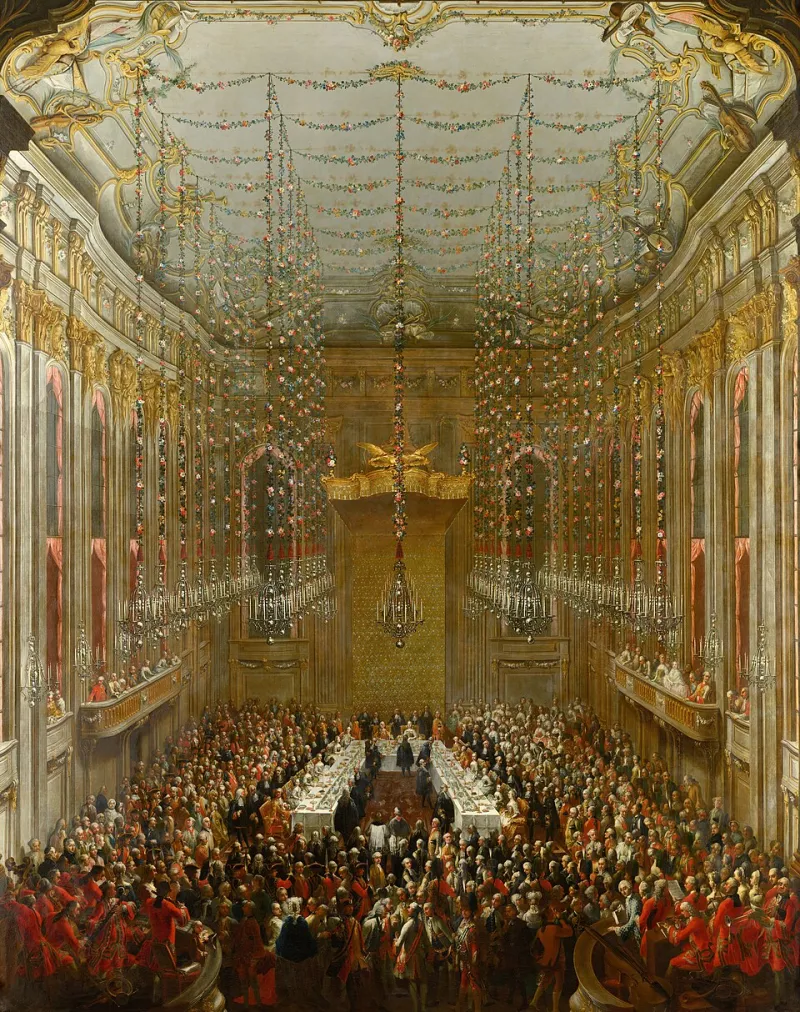
Venues that photograph beautifully in promotional materials often present a very different reality when filled with guests, running their standard lighting configurations. Overhead fluorescent or halogen fixtures, common in hotel ballrooms, community centers, and older church spaces, cast light from directly above — a direction that produces deep shadows under the eyes, nose, and chin, and tends to flatten features in ways that read as unflattering in photographs.
A seasoned photographer entering such a space runs through a rapid assessment: What is the color temperature of the available light? Are there windows that can serve as a secondary light source? Is there any flexibility in positioning subjects relative to the fixtures overhead? Can supplemental off-camera flash be introduced in a way that complements rather than overwhelms the ambient environment?
In many cases, the solution involves repositioning rather than overpowering. Moving a subject even a few feet toward a window can introduce a lateral light source that adds dimension to the face and counteracts the flattening effect of overhead fixtures. When that is not possible — during a ceremony, for instance, where movement is constrained — the photographer adjusts exposure to favor the most flattering available source and accepts that some frames will require more careful post-processing.
The decision-making framework here is essentially a triage process: identify the worst element of the current lighting, determine which of the available tools addresses it most effectively, and implement that adjustment without disrupting the moment being captured.
Fast-Moving Children and the Art of Anticipation
Children present a categorically different challenge — one that is less about light and more about timing and spatial awareness. A child at a wedding reception or family portrait session is not a cooperative subject in the conventional sense. They move unpredictably, react to attention in ways that can produce either wonderful spontaneity or immediate shutdown, and have no patience for the kind of deliberate positioning that works well with adults.
The professional adjustment here is philosophical as much as technical. Rather than attempting to impose a compositional plan on a moving child, the photographer shifts into an anticipatory mode — reading body language and behavioral patterns to predict where the child is likely to be in the next two to three seconds, and positioning accordingly. Shutter speed increases to freeze motion. Autofocus settings shift to continuous tracking rather than single-point. The frame is given more breathing room to accommodate unpredictable movement.
Perhaps most importantly, the emotional core of the shot changes. A child running toward a parent, dissolving into laughter, or staring with wide-eyed curiosity at something just outside the frame is not a failed portrait — it is an honest one. The adaptation is not just technical; it is a reorientation of what success looks like in that particular moment.
The Framework Underneath the Adaptation
Across all of these scenarios, a consistent pattern emerges in how experienced photographers approach rapidly changing conditions. The first step is always assessment — a quick, deliberate read of what has changed and what remains constant. The second is prioritization: of the available adjustments, which one addresses the most significant problem most efficiently? The third is execution, carried out without visible hesitation, because uncertainty communicates itself to subjects and disrupts the emotional environment of the shoot.
What makes this framework reliable is not that it produces a single correct answer in every situation. It is that it produces a answer quickly, allowing the photographer to remain present and responsive rather than frozen by indecision.
At Two15 Photography, this kind of in-the-moment adaptability is understood as inseparable from the work itself. The 2:15 window — that specific quality of light and attention that defines the brand's approach — is not always available on schedule. What is always available is the discipline to find the best version of whatever light exists, and to build something lasting from it.