Why Family Photos Always Seem to Go Wrong — And What Changes When a Professional Takes Over
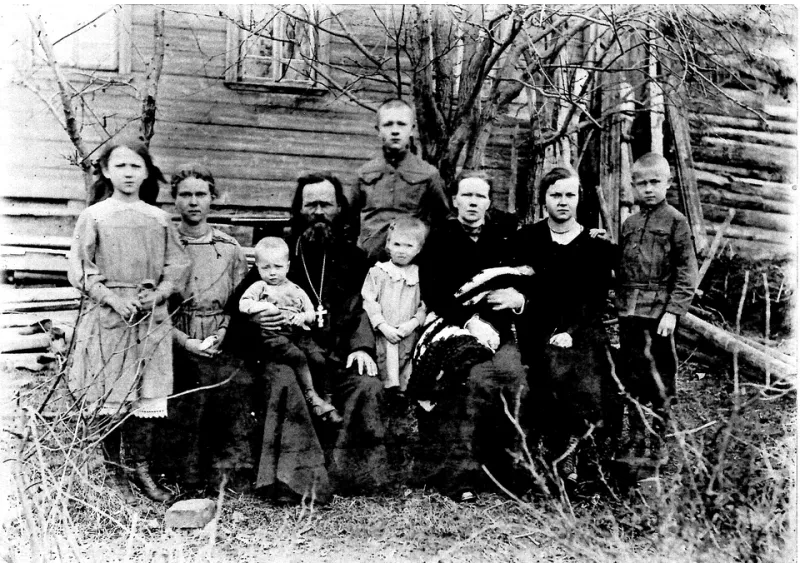
Photo: Professional photographer, Public domain, via Wikimedia Commons
The annual family photo has become something of a cultural ritual in the United States — and, for many families, a source of quiet dread. The logistics alone are formidable: coordinating schedules, agreeing on an outfit palette, finding a location that pleases everyone, and then somehow persuading a rotating cast of toddlers, teenagers, and reluctant uncles to look natural and happy at the same moment. The results, more often than not, are images that get used once and then quietly retired.
This is not a matter of bad luck. The consistent disappointment of casual family photography is the product of specific, recurring problems that are almost entirely predictable — and almost entirely solvable, but not by the person holding the phone or the entry-level camera.
The Coordination Problem Nobody Talks About
Before a single image is captured, family photography is already fighting against itself. The logistics of assembling multiple people — each with their own schedule, mood, and relationship to being photographed — create a pressure that most families dramatically underestimate.
By the time everyone has arrived, changed into their coordinated outfits, and gathered in the same physical space, a low-grade tension has usually settled in. Someone is running late. Someone else does not like the location. The children have already been told to behave for the past forty-five minutes and have exhausted their patience for it. The person designated to take the photos is simultaneously trying to manage the technical side and the interpersonal dynamics, and doing neither particularly well.
This is the environment in which most family portraits are attempted. It is not conducive to genuine expression.
The Unflattering Background Trap
Amateur family photography tends to be location-agnostic in a way that produces consistently mediocre results. The backdrop is often chosen for convenience — the living room wall, the front porch, the park closest to the house — without any consideration of how light falls across it at a given time of day, how it will compress or compete with the subjects in the foreground, or whether it carries visual clutter that will distract the eye.
The result is images where the subjects appear to be floating in front of an arbitrary environment rather than existing within a thoughtfully composed scene. Telephone poles emerge from heads. Harsh midday sun flattens faces and creates unflattering shadows. The background is technically present but aesthetically meaningless — or worse, actively distracting.
Location selection is a skill, not an afterthought. It requires an understanding of light direction at specific times of day, an eye for how depth of field will separate subjects from their surroundings, and experience with how different environments photograph versus how they simply appear to the naked eye.
The Expression Problem: Why Everyone Looks Stiff
There is a particular quality to photographs taken by someone the subjects know well — a self-consciousness that registers immediately in the images. When a family member or friend is behind the camera, the subjects are acutely aware of being observed by someone within their social circle. The result is a performance of naturalness rather than the thing itself: held smiles, slightly rigid posture, and eyes that are technically open but somehow absent.
This phenomenon is compounded by the standard approach to directing family portraits: "Okay, everyone smile!" It is the least effective instruction in photography, producing expressions that read as precisely what they are — forced compliance rather than genuine feeling.
Professional photographers approach this differently. The ability to build rapport with strangers quickly, to introduce movement or conversation that produces authentic reactions, and to capture the micro-moments between posed shots — the shared glance, the spontaneous laugh, the child leaning into a parent — is a specific, developed skill. It cannot be replicated by handing a camera to a well-meaning relative.
Timing and the Window That Most Families Miss
The timing of a family photo session is rarely chosen with any photographic logic. It is chosen around nap schedules, work commitments, and the availability of whoever is taking the photos. This means sessions frequently happen at midday in full sun, in the late afternoon when children are at their most fatigued, or inside under fluorescent lighting that renders everyone slightly green.
Light quality changes dramatically across the day, and the difference between a session scheduled at the wrong time and one timed to coincide with soft, directional natural light can be the difference between images that feel warm and alive and images that feel clinical and flat. This is not a minor consideration — it is one of the most significant variables in the entire process.
At Two15 Photography, scheduling is treated as a creative decision, not an administrative one. The quality of light available at a given location at a given time of year is factored into every session plan, because the physics of light do not accommodate convenience.
The Emotional Temperature of Family Photography
Family photographs carry an emotional weight that is easy to underestimate. For many families, particularly those gathering across distances for holidays or milestone occasions, the session is freighted with unspoken dynamics — old tensions, the awareness of aging, the complexity of blended families, or simply the pressure of wanting something beautiful to hold onto.
This emotional temperature affects how people present themselves in front of a camera. A photographer who is attuned to these undercurrents — who can read the room, de-escalate tension with humor or warmth, and create an environment where people feel genuinely at ease rather than merely instructed to appear so — produces fundamentally different results than one who is focused exclusively on the technical mechanics of the shot.
This is perhaps the least visible and most consequential thing that professional photographers bring to family portrait sessions: the capacity to manage the human element of the work with the same intentionality they bring to the technical element.
What the Final Image Actually Represents
A professionally executed family portrait is more than a technically competent photograph. It is a document of a family as it exists at a particular moment — the ages, the relationships, the specific quality of the light on a given afternoon. Families change. Children grow with remarkable speed. The composition of a family shifts over years in ways that are impossible to anticipate and impossible to revisit.
The images that endure in a family's visual history are rarely the ones taken hastily at a holiday gathering. They are the ones made with intention — by someone who understood that the goal was not simply to get everyone in the frame, but to capture something true about the people within it.
That is the work we take seriously at Two15 Photography. Not the mechanics of the shot, but the meaning behind it.