Fifteen Minutes Before the Doors Open: The Quiet Ritual of a Photographer's Venue Walkthrough
By the time the first guest signs the guest book at a wedding in Charleston or a corporate gala in downtown Denver, the photographer has already made a hundred quiet decisions. Where to stand during the vows. Which corner will catch the last of the afternoon sun. Which hallway will be too dim by 7 p.m. None of this happens by accident. It happens during a ritual most clients never witness: the venue walkthrough.
The Clock Starts at Arrival
Professionals rarely linger over small talk when they first step onto a property. The fifteen minutes before equipment setup are spent in deliberate observation — a rapid assessment that experienced photographers perform almost reflexively. The room is read the way a pilot reads instruments before takeoff.
Ceiling height comes first. Low ceilings force wider lenses and bounce flash differently; soaring rafters in a converted barn demand a plan for lighting the far corners. Then the windows: which direction do they face, and what will that mean at the hour the ceremony begins? A west-facing wall of glass in Texas can turn a 5 p.m. ceremony into a backlighting challenge. A north-facing window in a Seattle loft offers soft, steady light all day — a gift, if the photographer knows where to place the couple.
Mapping the Moments Before They Happen
Every event has predictable anchors: the processional, the first kiss, the toast, the first dance. A skilled photographer walks the space imagining each one. Where will the officiant stand, and will a column block the shot from the center aisle? Is there an elevated balcony for a wide establishing frame during the reception entrance? Where does the DJ booth sit, and will it glow blue in the background of every dance floor image?
Sightlines get special attention. The difference between a polished image and a lucky snapshot often comes down to positioning decided an hour before anyone knew it mattered. Photographers mentally mark two or three vantage points for each key moment, then plan movement between them — always considering where guests' sightlines are, too. Blocking a grandmother's view of the vows to get the shot is a rookie mistake the walkthrough prevents.
Anticipating the Light's Next Move
Light never holds still. The golden warmth pouring through ballroom windows at 4:30 will be gone by 6, and indoor tungsten will take over. During the walkthrough, professionals note which rooms shift from daylight to artificial light, which fixtures dim on a hotel's house system, and where a flash will be needed once the sun drops.
Outdoor spaces get the same scrutiny. A garden ceremony that looks pristine at noon may put guests squinting into direct sun by the scheduled start time. A patio perfect for sunset portraits might sit under a parking lot floodlight after dark. Knowing these shifts in advance lets the photographer build the timeline around the light rather than fight it later.
What Clients Should Show Their Photographer
Couples and event planners can make this assessment dramatically more effective with a little preparation. A few things worth doing during a walkthrough or site visit:
- Walk the actual sequence. Move through the day in order — getting-ready room, ceremony site, cocktail hour, reception — so the photographer sees the full flow, not just the pretty rooms.
- Point out the non-negotiables. If a specific heirloom cross-stitch will hang behind the head table, or a memorial candle will be lit during the ceremony, say so. Meaningful details deserve deliberate framing.
- Introduce the key players. Knowing which family members matter most — and which relationships are complicated — helps the photographer navigate groupings gracefully.
- Flag the restrictions. Some venues prohibit flash in historic chapels or confine photographers behind a line during ceremonies. Better to learn the rules in advance than improvise on the day.
- Share the timeline. Even a rough schedule lets a photographer predict exactly what the light will be doing when the first dance begins.
The Invisible Work Behind Polished Coverage
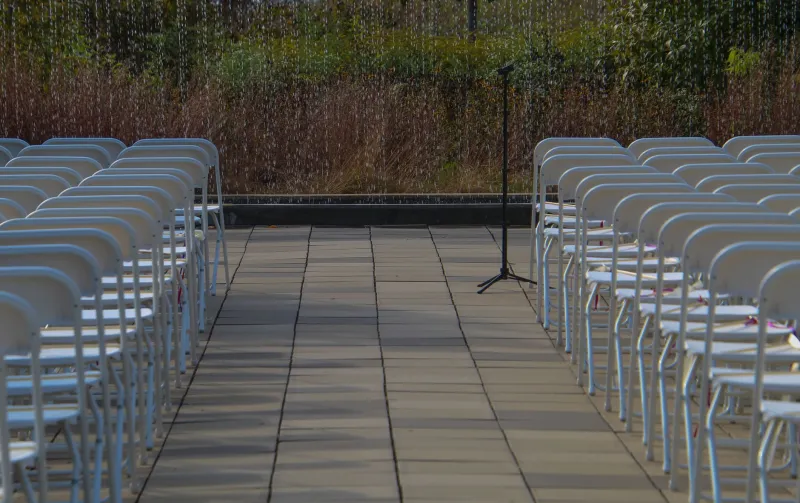
Clients often assume great event photography comes down to reaction — being ready when the moment happens. In truth, the best coverage is built on preparation that happened hours earlier, in an empty room, before the florist finished the arrangements. The photographer who seems to be in exactly the right place at every turn isn't fortunate. They scouted it, mapped it, and rehearsed it in their head while the chairs were still being set.
For couples planning a wedding, treat the walkthrough as part of the investment. Ask your photographer what they're noticing. Their observations — about light, space, and timing — often improve the event itself, not just the photographs of it. And when the gallery arrives weeks later, filled with images that feel effortless and inevitable, you'll know where that effortlessness actually began: fifteen quiet minutes, before the doors ever opened.