From Screen to Shelf: Why Printing Your Best Photos Changes Everything About How You Remember
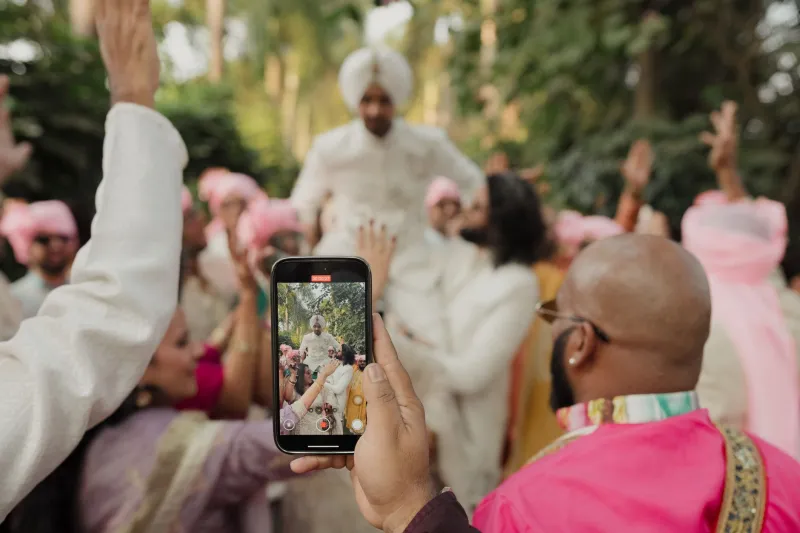
Somewhere on your phone, tucked between a screenshot of a restaurant menu and a blurry video from last Thanksgiving, is a photograph that deserved far better. It captured something real—a glance, a laugh, a quiet moment between two people who love each other. And it has been viewed exactly once.
This is the quiet tragedy of the digital era. We take more photographs than any generation in human history, yet we interact with fewer of them in any meaningful way. The solution, increasingly embraced by couples, parents, and families across the United States, is both old-fashioned and quietly radical: print the photograph. Frame it. Hold it.
The Psychology of Physical Objects
Researchers who study memory and material culture have long understood that physical objects anchor emotional experiences in ways that digital files simply cannot replicate. When you hold a printed photograph—when you feel its weight, run your thumb across its surface, and place it somewhere in your home—you are doing something neurologically distinct from scrolling past it on a screen.
Tangible objects engage multiple senses simultaneously. They occupy space in your environment, which means they do not require you to actively seek them out. They simply exist in your peripheral vision, on a shelf, above a fireplace, or resting in an album on a coffee table. That passive, ongoing presence is what transforms a captured moment into a living piece of your family's identity.
The digital photograph, by contrast, competes with an almost incomprehensible volume of other content. A notification arrives. A reel autoplays. The image that moved you thirty seconds ago is already three swipes behind you. No amount of technical excellence in the original photograph can overcome the structural hostility of the medium through which it is being consumed.
The Album as Heirloom
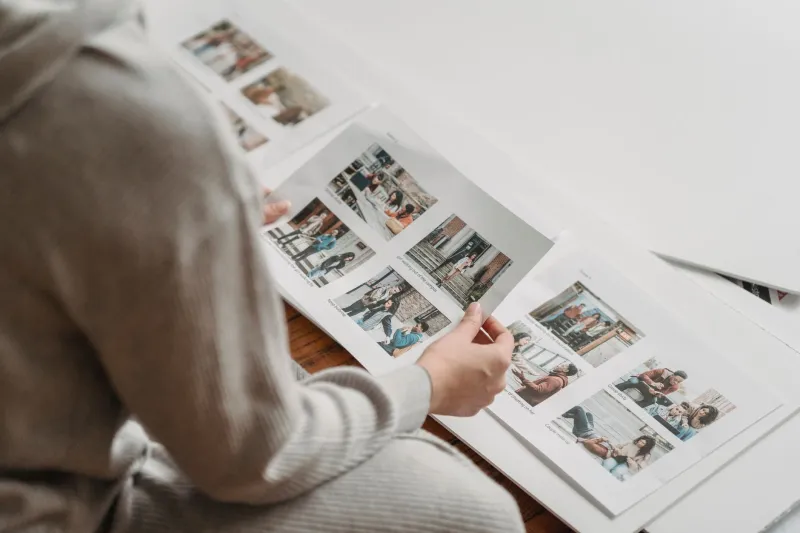
There is a reason grandparents' photo albums hold such extraordinary power in American households. Those worn, slightly faded books represent a form of curation that modern digital libraries rarely achieve. Someone made deliberate choices about which moments deserved permanence. Someone arranged them in a sequence that told a story. Someone held that album in their hands and decided it was worth keeping.
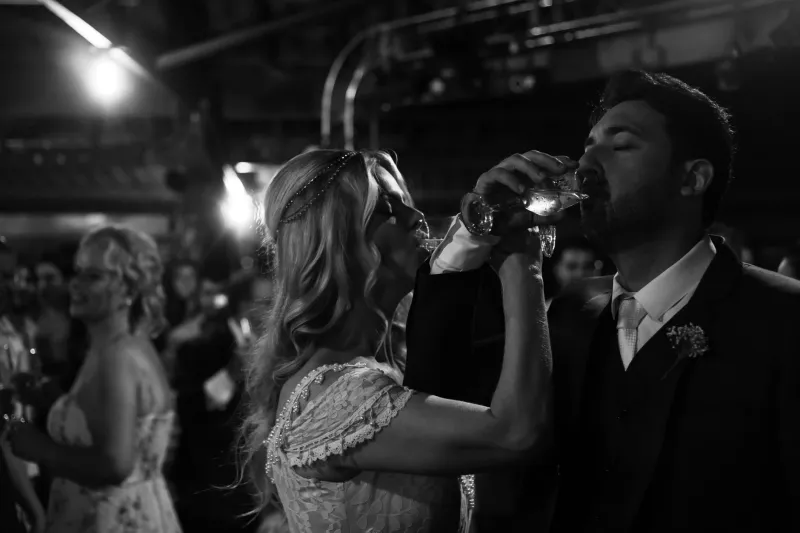
Professionally designed heirloom albums—the kind produced from a wedding, a family portrait session, or a milestone event—carry that same intentionality. When Two15 Photography works with clients on album design, the goal is never simply to collect images between two covers. The goal is to build an object that a couple's grandchildren might one day open with curiosity and wonder.
That is not a romantic exaggeration. It is a documented behavioral reality. Physical albums get passed down. Digital folders do not. Hard drives fail, cloud subscriptions lapse, and file formats become obsolete. A well-constructed album printed on archival-quality materials can survive a century without meaningful degradation.
Why the 'Just Post It' Model Is Failing Families
The cultural shift toward social media as the primary venue for sharing photographs has introduced a set of problems that most families do not recognize until years later. When the purpose of a photograph is to generate engagement from an audience, the photograph stops serving the people actually in it.
Parents who document their children's milestones primarily through Instagram are, in effect, producing content rather than preserving memories. The feedback loop of likes and comments subtly reshapes what gets photographed and how it gets displayed. Candid, imperfect, deeply personal moments—the ones that will matter most in twenty years—often go unposted because they do not perform well with a general audience.
Printing inverts this dynamic entirely. When you commit to a physical print, you are making a statement about what matters to you, not what will resonate with followers. That shift in orientation changes which photographs you choose to keep, how you think about the sessions you invest in, and ultimately how your family's visual history is composed.
Wall Art as Daily Ritual
Consider the difference between a photograph stored in a digital folder and a large-format print mounted on the wall of a family's living room. The digital image might be accessed a handful of times over the course of a decade—usually when someone is searching for something else entirely. The wall print is encountered every single day.
Children who grow up in homes where family photographs hang on walls develop a different relationship with their own history than children who grow up in homes where those same images exist only on a parent's phone. The physical presence of those photographs communicates something profound: these moments were important enough to honor. These people are worth looking at every day.
This is why so many couples who have worked with professional photographers return specifically requesting large wall prints from their wedding or engagement sessions. They have experienced firsthand the difference between images that live on a screen and images that live in a room.
What Professional Printing Actually Involves
Not all prints are created equal, and this is a distinction worth understanding before you invest in physical products from your photography sessions. Consumer-grade printing services, while convenient and inexpensive, typically use dye-based inks and standard paper stocks that fade, shift color, and degrade over time—sometimes within a decade.
Professional printing labs use pigment-based inks, archival papers, and controlled processes that are calibrated to match the color profiles of professional cameras and editing workflows. The result is a print that looks the way the photographer intended it to look, holds its color and contrast for generations, and responds well to the variable light conditions found in real American homes.
Beyond paper prints, professional labs offer a range of physical products—gallery wraps on canvas, metal prints, fine art paper editions, and flush-mount albums with lay-flat binding—that bring genuinely different aesthetic qualities to different types of images. A dramatic landscape from a destination wedding might sing on metal. A soft, intimate portrait might demand fine art paper. Understanding these distinctions is part of what a professional photography studio provides.
Making the Investment Make Sense
One of the most common hesitations couples and families express about professional printing is cost. High-quality physical products do represent a meaningful investment beyond the photography session itself, and that investment deserves honest acknowledgment.
But it also deserves honest context. The average American household spends considerable sums on decorative objects—furniture, artwork, and accessories—that carry no personal meaning whatsoever. A professionally printed, custom-designed album from a wedding or a family portrait session is simultaneously a beautiful object and an irreplaceable artifact. Very few purchases in a family's life can claim both qualities at once.
When you think about the photographs you wish you had from your own childhood, from your parents' wedding, from the years before certain people were no longer here to be photographed—you are thinking about prints. You are thinking about albums. You are not thinking about files.
The Moment Deserves More Than a Folder
At Two15 Photography, the belief that drives everything we do is simple: moments that matter deserve to be captured with skill and preserved with intention. That belief does not end when the shutter closes. It extends to what happens to the image afterward—how it is processed, how it is delivered, and ultimately how it lives in the world.
A photograph left inside a phone is a moment waiting to be forgotten. A photograph printed, framed, and placed somewhere it will be seen every day is a moment that keeps happening. It greets you in the morning. It catches your eye when you walk past the hallway. It starts conversations between people who were not there when it was taken.
That is what printing your best photographs actually does. It does not just preserve the past. It makes the past a continuous, living presence in the home you are building right now.