Why You Look Different in Photos Than in the Mirror — And What a Professional Does About It

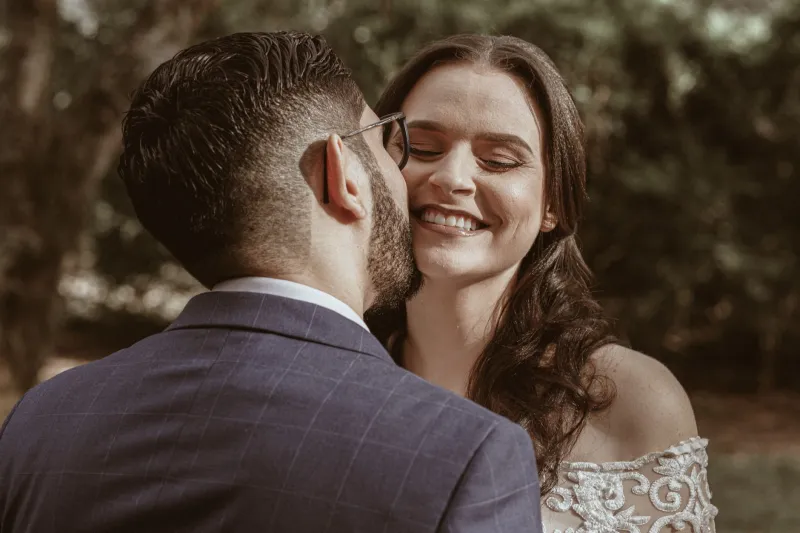
Photo by Photo by Szabo Viktor on Unsplash on Unsplash
Almost everyone has experienced it at some point. You catch a glimpse of yourself in a mirror before heading out the door, feel reasonably confident, and then later see a photograph from the same evening and wonder how the two images could possibly represent the same person. It is a remarkably common experience — and one that carries a surprising amount of science behind it.
The gap between how we perceive ourselves and how we appear in photographs is not a matter of imagination, nor is it simply a question of vanity. It is the product of real optical phenomena, neurological tendencies, and the particular way cameras render three-dimensional subjects onto a flat surface. Professional photographers understand these forces intimately — and they use that knowledge to close the gap in ways that most people never realize are happening.
The Mirror Is Lying to You — Kindly
Your bathroom mirror presents a version of yourself that your brain has spent years curating. Each time you glance at your reflection, your mind subtly fills in the gaps, smooths the asymmetries, and presents a composite image that feels familiar and, often, slightly more favorable than reality. This is not self-delusion — it is simply how human perception works. We are wired to recognize and normalize the faces we see most frequently, and no face is more familiar to us than our own.
The mirror also gives us something photographs cannot: control. You adjust your angle instinctively, tilt your chin, shift your weight, and find the version of yourself that feels most natural. You are, in effect, your own real-time photographer. A camera, by contrast, freezes a single moment from a fixed perspective — one you did not choose and may never have seen before.
That unfamiliarity alone is enough to make the image feel wrong, even when it is technically accurate.
Focal Length and the Physics of Distortion
Beyond psychology, there is a straightforward optical explanation for why photographs can feel so unflattering. Every camera lens renders space differently depending on its focal length — the distance at which it is designed to focus and compress the visual field.
A wide-angle lens, such as those found on most smartphones, captures a broad field of view by slightly bending the edges of the frame. When a face appears near the center of that frame, the effect is relatively subtle. But when a face is positioned toward the edges — or when the camera is held close to the subject — the distortion becomes noticeable. Noses appear wider. Foreheads seem larger. Features that sit closer to the lens are rendered disproportionately large relative to those further away.
This is why the selfie phenomenon has generated so much anxiety about appearance. The average selfie is taken from roughly twelve inches away, using a wide-angle lens. At that distance, the distortion is measurable and meaningful. A professional portrait, by contrast, is typically captured from a greater distance using a longer focal length — somewhere in the range of 85mm to 135mm — which compresses facial features in a way that more closely mirrors how the human eye perceives a face from a comfortable conversational distance.
In other words, the lens your photographer selects is not simply a technical preference. It is a deliberate decision that shapes how you appear in the final image.
Lighting Direction Changes Everything
The angle at which light strikes a face is perhaps the single most powerful variable in portrait photography, yet it is the one most commonly overlooked by non-professionals. Overhead lighting — the kind found in office buildings, event halls, and many indoor venues — casts downward shadows that deepen the appearance of under-eye circles, sharpen the nasolabial folds, and flatten the overall dimensionality of the face. It is, in the language of the industry, unflattering light, and it is everywhere.
Professional photographers approach lighting with a sculptor's mindset. Rather than accepting the ambient illumination of a space, they introduce or redirect light sources to wrap around the face in a way that softens edges, lifts shadows, and creates the subtle dimensional quality that makes a portrait feel alive. The direction of the key light — the primary source — determines whether cheekbones appear prominent or flat, whether the jawline reads as defined or diffuse, and whether the subject's eyes carry depth or appear flat and lifeless.
This is not manipulation. It is craft. And it is one of the clearest distinctions between a snapshot taken in passing and a portrait made with intention.
The Uncanny Valley of Self-Recognition
There is a psychological concept known as the uncanny valley — originally applied to robotics — that describes the unsettling feeling produced when something appears almost human, but not quite. A version of this effect occurs when people encounter photographs of themselves taken from unfamiliar angles.
Because we most often see ourselves in mirrors, our brains have built a strong mental model of our appearance that is, quite literally, a mirror image — a reversed version of what the rest of the world sees. When a camera captures the non-reversed version, the image can feel subtly but persistently wrong. Features that seemed balanced in the mirror appear slightly asymmetrical. The part in your hair falls on what feels like the wrong side. The angle of your smile looks unfamiliar.
This is not a flaw in the photograph. It is a flaw in the reference point. The image is correct; the expectation simply does not match it.
Experienced photographers understand this phenomenon and account for it in several ways — by helping clients understand what to expect before viewing their images, by selecting angles that minimize the dissonance, and by identifying each person's more photogenic side through careful observation during the session.
What Professional Photographers Actually Do Differently
When a skilled photographer directs a subject, the goal is not to manufacture a false version of that person. It is to navigate around the technical and perceptual obstacles that prevent the camera from rendering them as they genuinely are.
This involves choosing the right lens for the shooting distance, positioning light sources to sculpt rather than flatten, guiding posture and chin placement to elongate the neck and define the jaw, and selecting angles that align with — rather than contradict — each subject's natural geometry. It also involves building enough comfort and rapport during a session that the subject stops performing for the camera and simply exists in front of it, which is when the most truthful and flattering expressions tend to emerge.
The result is not an idealized fiction. It is a photograph that bridges the gap between how a person sees themselves and how they appear to others — one that feels, in the best possible sense, like recognition rather than surprise.
That is the work. And when it is done well, you will look at the image and think: yes, that is actually me.