One Millisecond Too Late: What You Lose When a Professional Isn't Behind the Lens
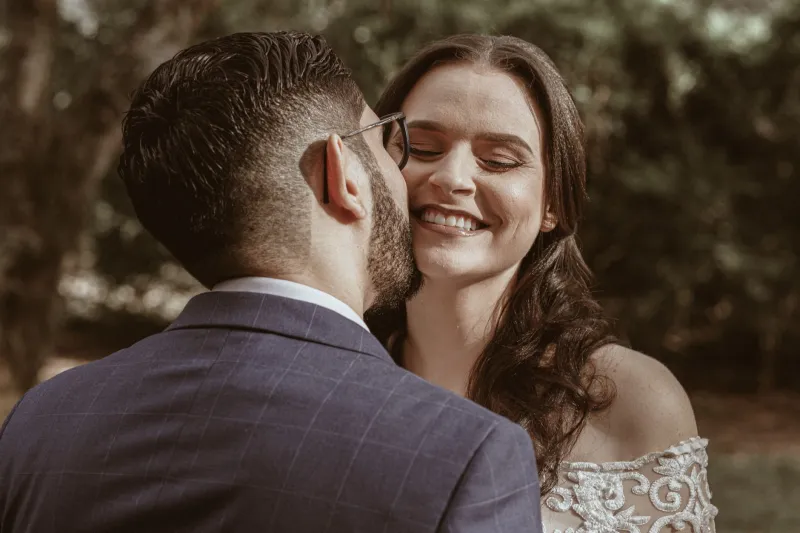
There is a moment at nearly every event — a wedding, a graduation party, a corporate milestone — when something genuinely unrepeatable happens. A flower girl trips and recovers with a grin that could light up a cathedral. A groom's composure breaks for exactly three seconds when he sees his partner walking down the aisle. A best friend whispers something into the ear of the guest of honor, and the resulting expression is equal parts shock and pure joy.
These moments last, on average, less than two seconds. Most photographs taken that day will not include them.
The question worth asking is not whether those moments happened. They did. The question is whether anyone was ready.
The Decisive Moment — And Why It's Harder Than It Looks
The French photographer Henri Cartier-Bresson coined the term "the decisive moment" in 1952, describing it as the instant when the visual and emotional elements of a scene align into something that transcends mere documentation. Decades later, that concept remains the cornerstone of meaningful photography.
But what Cartier-Bresson understood — and what most casual photographers underestimate — is that the decisive moment cannot be waited for. It must be anticipated.
Amateur photographers, regardless of how capable or well-intentioned, operate reactively. They see something happening and then reach for the camera, unlock the screen, open the app, and press the shutter. By that point, the expression has shifted. The child has looked away. The moment has passed.
Professional photographers operate on an entirely different timeline. They are not waiting to see what happens. They are reading the room, studying body language, and positioning themselves for what is about to happen — often before anyone else in the room has any sense that something worth capturing is coming.
The Technical Gap That Most People Don't Discuss
Beyond anticipation, there is a technical reality that separates professional results from amateur attempts: shutter lag.
Smartphone cameras and consumer-grade digital cameras introduce a measurable delay between the moment a user presses the shutter button and the moment the sensor actually captures the image. On modern smartphones, this lag can range from 50 to 200 milliseconds depending on the device and lighting conditions. That may sound negligible, but in the context of a fleeting emotional expression or a split-second action, it represents the difference between capturing the peak of a moment and capturing its aftermath.
Professional cameras paired with professional lenses are engineered to minimize this delay dramatically. More importantly, professionals use burst shooting strategically — capturing rapid sequences of frames during high-probability windows — so that even within a fast-moving scene, the single frame that contains the decisive moment is preserved.
This is not luck. It is preparation combined with the right tools.
What Hesitation Actually Costs
There is a phenomenon in photography sometimes called "shutter hesitation" — the instinctive pause that non-professionals experience when they are uncertain whether something is worth photographing. It is rooted in social awareness, self-consciousness, and the fear of appearing intrusive.
A guest at a wedding who notices a touching moment between the mother of the bride and her daughter may hesitate: Should I take a photo? Is it rude to point a camera at them right now? Will the flash disturb the moment?
By the time those questions resolve, the embrace has ended.
A professional photographer does not experience this hesitation — not because they are callous, but because they have spent years developing the instinct to act decisively and discreetly. They have learned to move quietly, shoot without flash when necessary, and position themselves in advance so that capturing the moment requires nothing more than a single, silent press of the shutter.
That confidence is not arrogance. It is training.
Reading the Room Before the Room Knows What It's Doing
One of the most underappreciated skills in professional event photography is environmental reading — the ability to assess a space, identify the likely emotional hotspots, and pre-position accordingly.
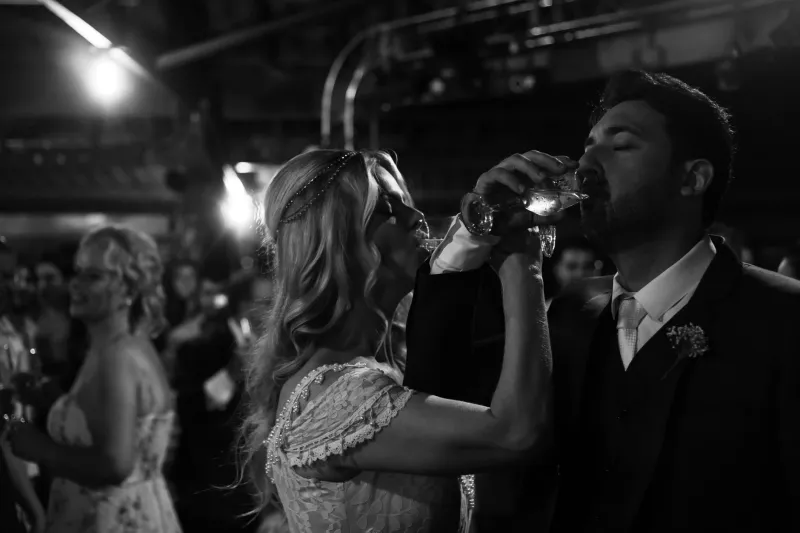
Consider a wedding reception. A professional photographer walking into that room is not simply looking for good backgrounds or flattering light, though both matter. They are identifying the table where the grandmother is seated and noting that the couple will likely visit her early in the evening. They are watching the best man's body language during dinner and predicting that his toast will produce genuine, unrehearsed emotion. They are noting the corner where the couple's young nieces and nephews have gathered and understanding that children, left to their own devices, generate the most authentic moments of any event.
These predictions are not always correct. But they are informed by experience — by having photographed dozens or hundreds of similar events and understanding the rhythms and patterns of human behavior under celebration.
When the grandmother pulls her grandchild into an unexpected, tearful hug, the professional is already in position. The camera is already raised. The exposure settings are already dialed in for that corner of the room.
The guest across the table is still reaching for their phone.
The Moments That Cannot Be Recreated
There is a particular cruelty to missed photographs: unlike a missed flight or a forgotten reservation, they cannot be recovered. No amount of money or goodwill can reconstruct the expression on a father's face when his daughter says her vows. No reshoot can reproduce the spontaneous chaos of three generations of family members collapsing into laughter over a shared joke.
These moments are singular. They are the reason events are photographed at all — not to document the floral arrangements or the table settings, but to preserve the human truth of what transpired.
When a professional photographer is present, those moments are caught. Not all of them — no photographer captures everything — but a trained professional, operating with the right equipment and the right instincts, will preserve a far greater proportion of the moments that will matter most when you look back five, ten, or twenty years from now.
The Standard Worth Holding
At Two15 Photography, the work of capturing decisive moments is taken seriously because the stakes are genuine. The images produced at a single event may become the visual record by which an entire chapter of a family's life is remembered. That responsibility shapes every decision — from the equipment selected to the positioning chosen to the hours spent studying the psychology of human expression and anticipation.
The blink you'll regret is not a failure of the moment. It is a failure of preparation. And preparation, above all else, is what distinguishes a photograph that stops you cold from one that never existed at all.
When something worth remembering is about to happen, the only question that matters is whether the right person is already watching.