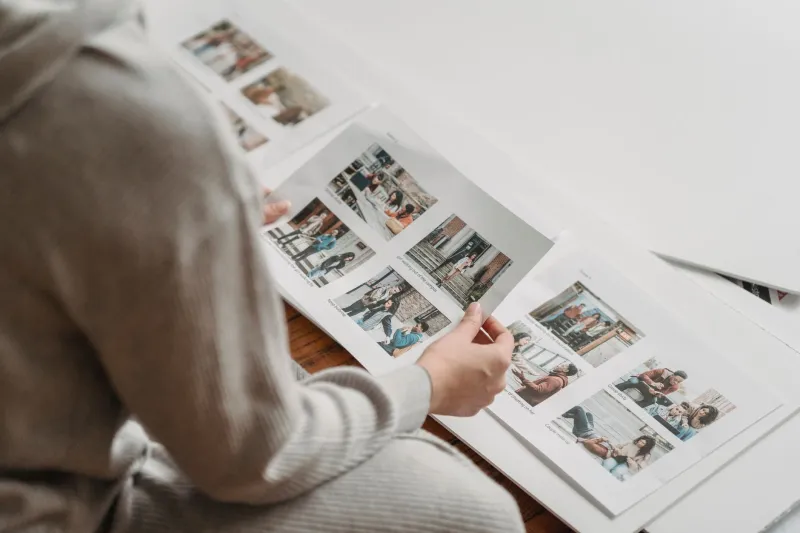
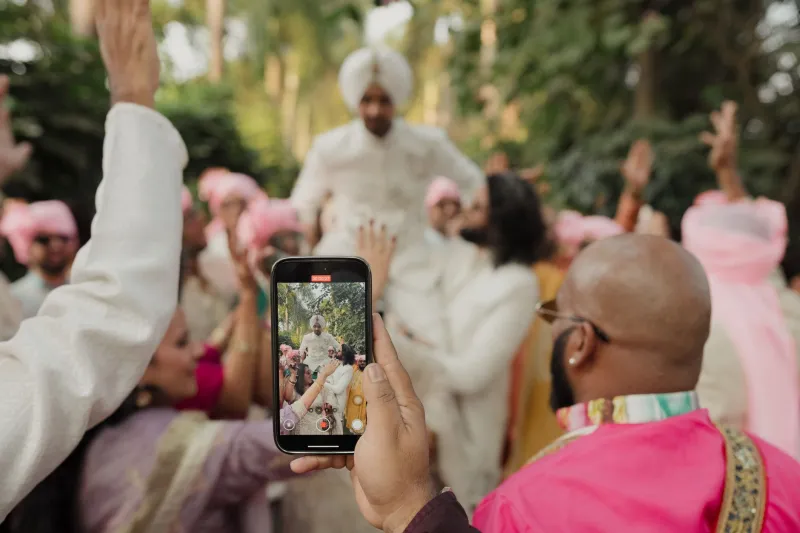
The Frames That Disappear First: A Photographer's Field Guide to Family Gatherings
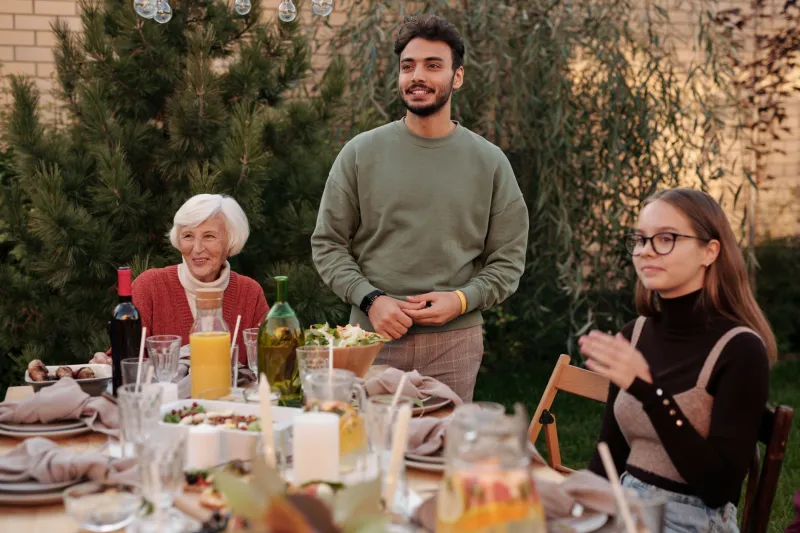
Walk into any American family gathering — a Thanksgiving in Ohio, a Fourth of July cookout in Georgia, a birthday dinner in a Phoenix backyard — and you'll notice the same pattern. Someone lines everyone up against the wall for a group photo. Someone else grabs a phone for a selfie at the table. And then the camera disappears until dessert.
As working photographers, we've learned that the photographs people treasure decades later almost never come from those moments. They come from the in-between. The unguarded, unremarkable instants that nobody thinks to frame — until they're gone and irreplaceable.
This is the shot list nobody hands you. Consider it our field guide to the frames that disappear first.
Why the Obvious Shots Age Poorly
Posed group photos serve a purpose: they document attendance. But documentation is not memory. A line of relatives squinting into the sun tells you who was there, not what it felt like to be there.
Professional photographers spend most of an event watching, not shooting. We're looking for friction points — the hands, the rituals, the small collisions of generations — because that's where a family's actual life reveals itself. The list below is what we're watching for.
The Twelve Frames Worth Chasing
1. The hands that made the meal. Flour-dusted knuckles kneading pie dough, a grandfather's weathered fingers shucking corn on a paper towel. Hands carry decades of history in a single frame, and they're almost never photographed.
2. The kitchen as a war zone. After the meal is photographed and admired, the aftermath tells a truer story — stacked dishes, a counter buried in casserole dishes, someone laughing over a sink full of pots.
3. The driveway game. The half-court shot that turned into an argument, the cornhole boards with the paint worn through. Backyard competition is pure, unposed Americana, and it produces the loudest laughter of the day.
4. Generations in one frame — unposed. A great-grandmother and a toddler at the same table, unaware of the camera. That four-generation arc is the single most requested print we're asked to make, years later, from candid frames nobody remembers us taking.
5. The person who did the cooking, finally sitting down. There's a specific exhaustion and satisfaction on that face. It deserves its own portrait.
6. The family recipe in progress. The card box splattered with vanilla, the handwritten recipe in faded ink. Photograph the recipe itself. Paper doesn't last forever either.
7. The kids' table. Not the children posed — the children mid-chaos. Negotiating, giggling, trading rolls like currency. It's a sociology study in a single frame.
8. The quiet corner conversation. Two people on the porch steps, one telling a story, the other leaning in. These small pairings are the emotional architecture of the day.
9. The dog (or the dog's absence). Family pets are emotional anchors. The dog under the table, the dog being fed contraband stuffing. And if a beloved pet has recently passed, the empty dog bed by the door is a photograph with real weight.
10. The group photo — after it's over. Everyone breaks formation, someone cracks a joke, shoulders drop. The frame two seconds after the pose collapses is almost always better than the pose.
11. The details that won't exist next year. The chipped serving bowl from a grandmother's kitchen. The high chair that's about to be outgrown. The hand-me-down quilt on the couch. Objects are time capsules.
12. The empty chairs after everyone leaves. This is the frame almost no amateur takes and the one that stops people cold a decade later. The folded table, the cleared tablecloth, the late afternoon light on an empty porch. It's the photograph that says: this happened, and it mattered.
How to Actually Get These Shots
Three principles from the field:
Shoot small and wide. Alternate between detail close-ups and wider environmental frames so the story has both texture and context.
Stay ready, not intrusive. Keep the camera up and the shutter quiet. The moment someone notices the lens, the frame changes. Work the edges of rooms; the best candid light is usually near windows and doorways.
Give yourself a final ten minutes. After guests leave, walk the space. Empty rooms and lingering details are the last unclaimed photographs of the day.
The Point of the List
Nobody regrets not having another posed line-up. People regret not having their mother's hands, their father's laugh, the house where everything happened. Photograph what the gathering actually is — not just who attended it — and you'll build an archive that still means something long after the day itself has faded from memory.