Your Brain Was Never Going to Save That Moment — But a Camera Will
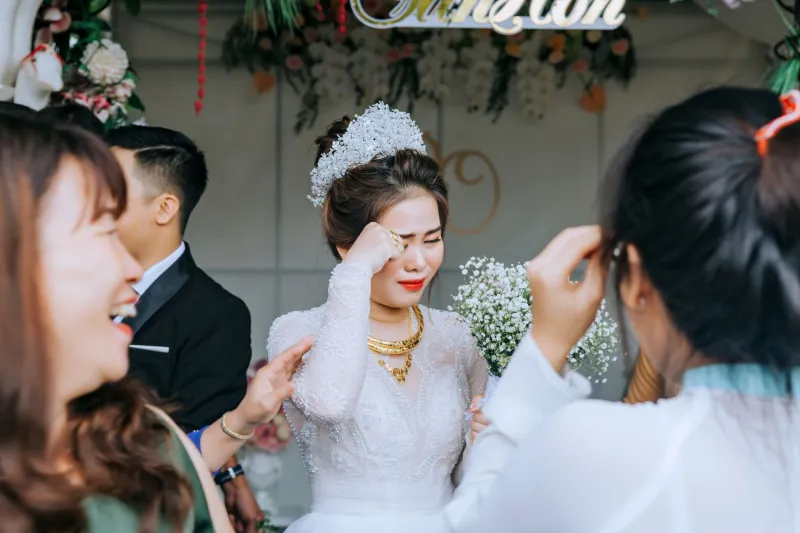
There is a persistent and somewhat flattering myth most of us carry into the biggest days of our lives: that the intensity of an experience will burn it permanently into memory. We tell ourselves that a moment this significant — a wedding ceremony, a milestone birthday, a child's first steps — is simply too important to forget. The emotion alone, we assume, will do the work of preservation.
Neuroscience, unfortunately, disagrees.
The very conditions that make a moment feel unforgettable are, paradoxically, the conditions most likely to distort or erase it. And that single insight reshapes the entire conversation around professional photography — not as an aesthetic indulgence, but as a factual corrective to a brain that was never designed to do what we ask of it.
The Spotlight Effect and What It Costs You
Cognitive researchers use the term attentional narrowing to describe what happens to human perception under emotional stress. When the stakes are high and the nervous system is activated — as it reliably is on a wedding day or at a significant family gathering — the brain doesn't expand its awareness to capture more. It contracts.
Like a spotlight on a stage, your conscious attention locks onto a small portion of the scene in front of you. A bride walking toward the altar may be acutely aware of her partner's expression and almost nothing else. A parent watching their child receive a diploma may register the handshake and the smile but retain almost no detail about the surrounding ceremony. This is not a failure of effort or sentiment. It is simply how the human brain allocates cognitive resources during moments of peak emotional activation.
The result is a memory that feels vivid but is actually riddled with gaps. The details that weren't inside the spotlight — the expressions of guests, the quality of light through a window, the quiet moment between two old friends in the back row — were never encoded at all.
How Emotion Shapes — and Distorts — What We Keep
There is a well-documented phenomenon in memory research called emotional memory enhancement, and it sounds more reassuring than it actually is. Yes, emotional arousal does strengthen the encoding of certain memories. But the enhancement is highly selective, and it comes with a significant cost to accuracy.
Research from the field of cognitive psychology consistently shows that high-emotion events produce memories that are confident but not necessarily correct. The brain prioritizes the emotional core of an experience — how something felt — while sacrificing peripheral detail, accurate sequencing, and contextual nuance. Ask anyone to recount their wedding day in precise chronological order, and the story will almost always contain gaps, transpositions, and moments that have been unconsciously reconstructed from photographs taken afterward rather than from genuine recollection.
This last point is critical. Over time, many people are not actually remembering their events at all. They are remembering their photographs of those events. The image becomes the memory, which means that the quality, completeness, and authenticity of that photographic record directly determines the quality of the memory itself.
The Reconstruction Problem
Memory is not a recording. This is one of the most foundational and consistently replicated findings in all of memory science, and it matters enormously in this context.
Every time a human being recalls a past event, the brain does not retrieve a stored file — it reconstructs the experience using whatever fragments are available, filling gaps with inference, expectation, and information acquired after the fact. This process is largely unconscious and feels entirely authentic. The reconstructed memory carries all the subjective weight of a genuine one, even when it diverges significantly from what actually occurred.
For ordinary, low-stakes events, this is a manageable quirk. For the moments that define a life — a ceremony, a reunion, a celebration that brings together people who may never gather again — the stakes of inaccurate reconstruction are considerably higher. What is preserved in memory may reflect what you hoped the day would feel like more than what it actually was.
A professional photographer operating throughout your event is not subject to these constraints. The camera does not narrow its attention. It does not reconstruct from fragments. It does not conflate the emotional weight of a moment with the factual details surrounding it. It simply records what was there.
Why Professional Coverage Changes the Equation
The distinction between professional photography and casual documentation — a well-meaning guest with a smartphone, or even a capable amateur — becomes much sharper when viewed through this neurological lens.
A professional photographer brings more than technical skill to an event. They bring sustained, disciplined attention across the full arc of an occasion. While you are absorbed in the experience — as you should be — they are watching the room. They are noticing the grandmother dabbing her eyes in the third row, the flower girl's expression of total bewilderment, the quiet hand-squeeze between two people who haven't seen each other in years. These are the moments that live entirely outside your attentional spotlight. They are real, they are significant, and without a professional present, they are simply gone.
This is the dimension of professional photography that rarely appears in conversations about packages and pricing, but it may be the most important one. The coverage isn't just documentation. It is the recovery of everything your own perception was physiologically incapable of capturing.
The Archive You'll Actually Need
There is a long-term dimension to this conversation that deserves acknowledgment. Memory degrades. Even the reconstructed, emotionally enhanced versions of our most important moments become less accessible over time. Details fade, sequences blur, faces become harder to place.
What remains — what actually holds the record of a life's most meaningful occasions — is the photographic archive. And the integrity of that archive is determined entirely by decisions made on the day itself.
A comprehensive, professionally executed body of work from a significant event becomes more valuable with each passing year, not less. The images that seemed like pleasant documentation in the weeks after a wedding become irreplaceable primary sources a decade later — particularly when the people in them have aged, moved, or are no longer present.
Preserving Truth, Not Just Beauty
At Two15 Photography, the work of capturing an event has always been understood as something more than the pursuit of beautiful images. Beautiful images matter — composition, light, and technical precision are non-negotiable elements of the craft. But the deeper purpose is fidelity: an honest, complete, and enduring record of something that actually happened.
Your brain, however extraordinary, was built for navigation and survival — not archival accuracy. It will give you the feeling of your most important days. It will give you the emotional residue, the sense-memory, the warmth of knowing something profound occurred.
But the truth of what happened — who was there, what their faces looked like, the precise quality of the light at a specific moment in time — that belongs to the photographs.
And that is precisely why having the right photographer present isn't a question of aesthetics or budget. It is a question of what you want to actually remember.