When the World Walks Into Your Shot: How Professional Photographers Turn Chaos Into Compelling Storytelling
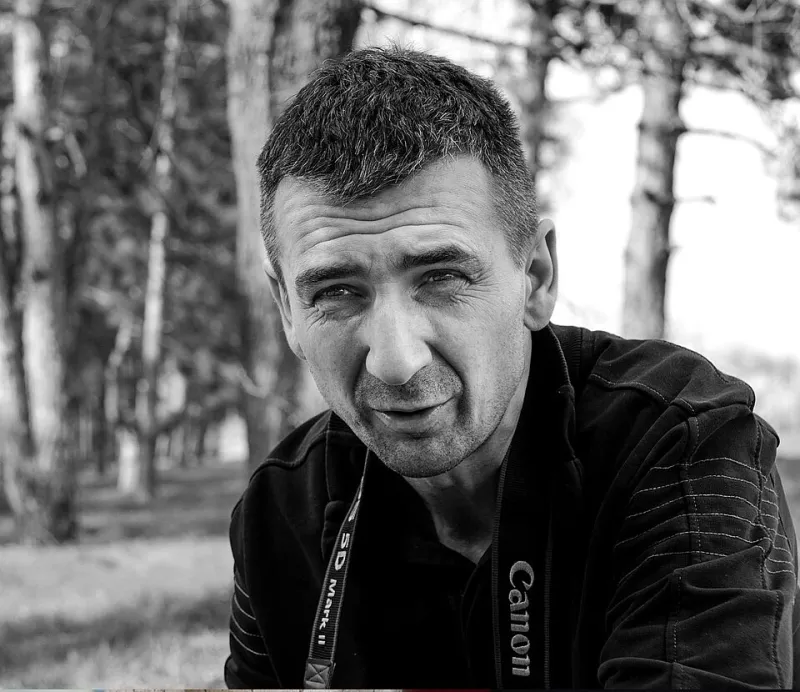
Photo: Fotografkrusevac, CC BY-SA 4.0, via Wikimedia Commons
There is a particular kind of pressure that arrives in the seconds before a shutter fires — the awareness that the world does not pause for your composition. A child wanders into the aisle during a ceremony. A stranger on a city street glances directly into your lens at precisely the wrong moment. A reflective surface catches something you did not plan for. These are not failures of preparation. They are simply the nature of photography practiced in real, populated, unpredictable environments.
The question worth asking is not how to eliminate these variables entirely — that goal is both unrealistic and, as many seasoned photographers would argue, artistically limiting. The more useful question is: what habits of mind and technique allow a professional to respond in real time, turning potential disruptions into elements that serve the story rather than undermine it?
The Myth of Total Control
Beginning photographers often operate under the assumption that mastery means controlling every element within the frame. This belief leads to a kind of rigidity — an over-investment in a single composition that cannot survive contact with reality. When something unexpected enters the scene, the unprepared photographer freezes, misses the moment, or produces an image that feels stiff and forced in its attempt to erase all spontaneity.
Professional photographers understand something different: the frame is a negotiation, not a decree. The environment will contribute elements you did not invite, and your skill lies in deciding — quickly — whether to exclude, incorporate, or reframe around them. This mindset shift is foundational. It transforms disruptions from threats into raw material.
Anticipation as the First Line of Defense
The most effective response to unexpected elements begins well before the shoot itself. Experienced photographers conduct thorough site assessments, noting where foot traffic flows, where light sources create unwanted reflections, and where bystanders tend to congregate. At an outdoor wedding in a public park, for example, a professional will identify sightlines early, position subjects to minimize background exposure to passersby, and communicate clearly with venue coordinators about crowd management during key moments.
This kind of preparation does not guarantee a clean frame, but it dramatically reduces the frequency of intrusions. More importantly, it gives the photographer a mental map of the location — so when something unexpected does occur, the response is grounded in knowledge rather than panic.
Timing awareness also plays a critical role. Public spaces operate on rhythms: tour groups move through historic venues on predictable schedules, pedestrian traffic on city streets surges and ebbs with traffic lights, and beach crowds thin considerably in the early morning hours. A photographer who studies these patterns can build shooting windows around them, reducing the likelihood of unwanted company in the frame.
Reading the Room: Real-Time Assessment
When prevention falls short — and it will — the professional's attention shifts to real-time assessment. The first decision is whether the unexpected element is a problem or an opportunity. This is not a trivial distinction.
A stranger caught mid-stride in the background of a wedding portrait might, in fact, lend a sense of urban vitality to the image. A child making a face behind the head table during a reception can become the most memorable photograph of the evening. A reflection in a rain-slicked street that catches the couple's silhouette may produce an image more resonant than anything originally planned. The photographer who immediately reaches for the delete button may be discarding the very images that will define the final gallery.
The question to ask in the moment is whether the unexpected element adds or subtracts from the narrative being constructed. If it adds — even in ways that are messy or imperfect — it deserves consideration. If it genuinely detracts, the professional has several tools available: repositioning the subject, adjusting the focal length to compress or expand the depth of field, shifting the angle to use foreground elements as natural barriers, or simply waiting for a brief window when the intrusion clears.
Technical Responses to Common Disruptions
Several specific disruptions arise with enough frequency that professional photographers develop practiced responses for each.
Photobombs and background bystanders are perhaps the most common challenge in public or semi-public settings. A shallow depth of field — achieved through a wide aperture — can render background figures as soft, indistinct shapes that no longer compete with the primary subjects. Alternatively, repositioning to place the subjects against a clean architectural surface or natural backdrop eliminates the problem entirely without requiring the bystanders to move.
Reflections in windows, mirrors, and polished surfaces require a different approach. While unintended reflections can be distracting, they can also be deliberately incorporated into compositions that convey depth, duality, or a sense of place. When a reflection is genuinely unwanted, shifting the shooting angle by even a few degrees often removes it from the frame entirely.
Uninvited guests with cameras — the well-meaning relative who steps into the aisle to capture the first kiss — represent one of the more socially delicate disruptions a wedding photographer faces. The professional response here is partly technical and partly relational. Briefing the officiant to request that guests remain seated during key moments, positioning oneself at multiple angles to account for obstructions, and maintaining a calm, unhurried demeanor all contribute to managing this challenge without creating tension.
Environmental intrusions — a delivery truck idling at the edge of a scenic overlook, construction noise that disrupts a quiet outdoor portrait session, unexpected weather — require the broadest form of adaptability. These situations call not just for technical adjustments but for a willingness to abandon the original plan entirely and build something new from what the moment actually offers.
The Authentic Image and Why Disruption Serves It
There is a deeper argument to be made here, one that goes beyond technique. The photographs that endure — the images people return to years after they were taken — tend to carry within them some evidence of real life. A perfectly composed, flawlessly lit portrait of a couple against a pristine backdrop may be technically admirable, but it can also feel removed from the texture of lived experience.
The candid laugh that erupts because a dog wandered through the frame. The moment of genuine surprise caught because something unplanned happened at precisely the right instant. The background detail that, in retrospect, places the image unmistakably in a particular city or season or era. These are the elements that transform a technically competent photograph into a document of something that actually occurred.
Professional photographers develop the capacity to hold two things simultaneously: the intention of a carefully considered composition and the openness to abandon that intention when something better presents itself. This balance — between planning and responsiveness, between control and surrender — is among the most difficult skills in the craft to teach, and among the most valuable to possess.
What This Means for Clients
For those commissioning professional photography — whether for a wedding, a corporate event, or a commercial project — understanding this dimension of the work offers a useful reframe. The photographer you hire is not simply someone who operates expensive equipment in controlled conditions. They are someone trained to remain effective when conditions stop being controlled, which is to say, for much of the time.
The disruptions that feel like problems in the moment are often, in the hands of a skilled professional, the source of the images that matter most. That is not an accident. It is the result of years of practice, deliberate study, and a philosophy that treats the unpredictable world not as an obstacle to good photography, but as one of its most reliable collaborators.