Scroll, Forget, Repeat: How the Digital Photo Flood Is Quietly Erasing Your Most Precious Memories

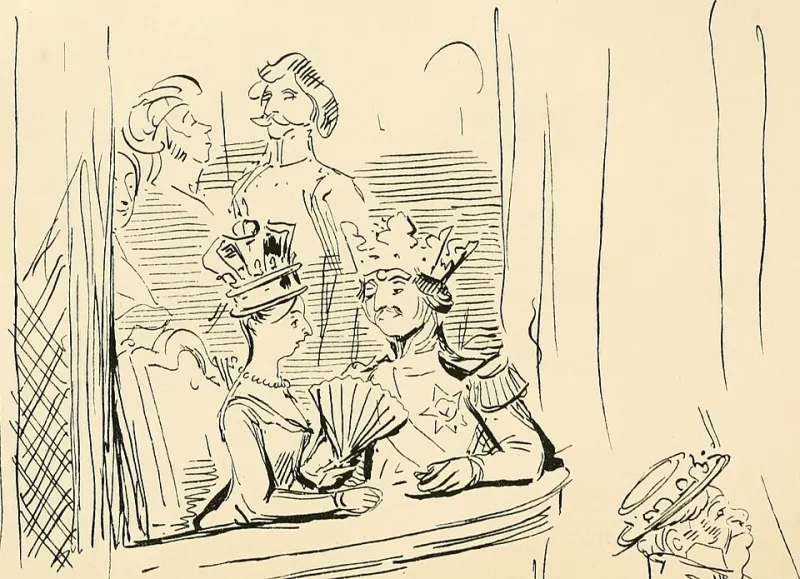
Photo: Master of the Aeneid, CC0, via Wikimedia Commons
There is a photograph somewhere on your phone right now that you have not looked at in over a year. Perhaps it is a birthday dinner, a weekend trip, or a quiet Sunday morning that felt worth preserving in the moment. You tapped the shutter, maybe applied a filter, and moved on. And there it sits — buried beneath thousands of other images, slowly fading into an archive that no one will ever fully revisit.
This is the quiet paradox of modern photography. We have never captured more, and yet many of us feel we are remembering less.
The Illusion of Preservation
The average American takes well over a thousand photos per year on their smartphone. Cloud storage has removed the practical limits that once forced people to be selective — no more rolls of 24 exposures, no more cost-per-print calculations at the drugstore counter. The result is an abundance that, counterintuitively, has made individual photographs feel less significant.
Cognitive psychologists refer to a phenomenon called the photo-taking impairment effect, first documented by researchers at Fairfield University. The finding is striking in its simplicity: when people photograph an object or experience, they tend to remember it less clearly than when they simply observe it. The act of reaching for a camera — or a phone — signals to the brain that the task of remembering has been outsourced. The mental effort required to encode a genuine memory is never fully engaged.
In other words, the very tool we use to preserve moments may be undermining our ability to actually live them.
A Thousand Photos, None of Them Yours
There is another dimension to this problem that goes beyond neuroscience. When every guest at a wedding reception is holding a phone at eye level, and every attendee at a graduation ceremony is framing their own shot, the collective experience of the event begins to fragment. Rather than sharing a single, unified moment, each person retreats behind a screen to document their own version of it — a version that will likely look nearly identical to the hundred other versions captured from adjacent angles.
The resulting images are rarely bad. Modern smartphone cameras are technically impressive. But they tend to be interchangeable. They document the surface of an event rather than its emotional interior. They show what was present, not what was felt.
Professional photographers approach documentation differently. The goal is not to capture every moment indiscriminately, but to identify and isolate the moments that carry emotional weight — the glance exchanged between a father and daughter before she walks down the aisle, the unguarded laughter at a reception table, the quiet exhale of relief after years of hard work culminate in a single ceremony. These are not moments that announce themselves. They require patience, experience, and a trained eye that is fully present rather than divided between participation and documentation.
The Print as an Anchor
There is a reason that the photographs most people describe as meaningful — the ones displayed in living rooms, passed between generations, carried in wallets — tend to be printed. Physical photographs occupy space in the world. They cannot be scrolled past. They demand attention in a way that a digital file, competing with thousands of others on a glowing screen, simply cannot.
Research in memory science consistently supports the idea that tangible objects serve as more reliable retrieval cues for autobiographical memory than digital ones. A framed photograph on a mantelpiece triggers a story every time someone glances at it. A file in a cloud folder may never be opened again.
This is not an argument against digital photography — it is an argument for intentionality. The issue is not the medium itself, but the relationship we have developed with it. When capturing an image requires no cost, no effort, and no limit, we stop asking whether a moment is worth preserving. We simply capture everything and curate nothing.
What Intentional Documentation Looks Like
At Two15 Photography, we think about documentation as an act of curation rather than accumulation. The photographs we deliver are not a raw data dump of every second of an event. They are a carefully considered narrative — a visual story with a beginning, a middle, and an emotional arc that reflects what the day actually meant to the people who lived it.
This is a fundamentally different product from what a phone produces, not because professional cameras are technically superior (though they are), but because professional photographers bring editorial judgment to the process. They know when to step back and let a moment breathe. They know when to move closer. They understand light, composition, and timing in ways that elevate an image from a record to a piece of art.
More importantly, they are not participants in the event. They are observers — fully present, but with a specific purpose. That separation allows them to see things that guests and family members miss because they are too busy experiencing the moment themselves.
Reclaiming the Meaning in Your Images
If you are someone who has accumulated years of smartphone photographs and rarely returns to them, consider what you actually want from the images you keep. Do you want documentation, or do you want memory? Do you want a complete record, or a meaningful one?
For the moments that matter most — the milestones, the celebrations, the transitions — the case for professional photography is not about luxury or aesthetics. It is about ensuring that the photographs you have in twenty years are ones you will actually look at. Ones that will make you stop, sit down, and remember not just what happened, but how it felt.
The best photographs do not simply capture a moment. They return you to it. And that is something no camera roll, however large, can reliably provide.